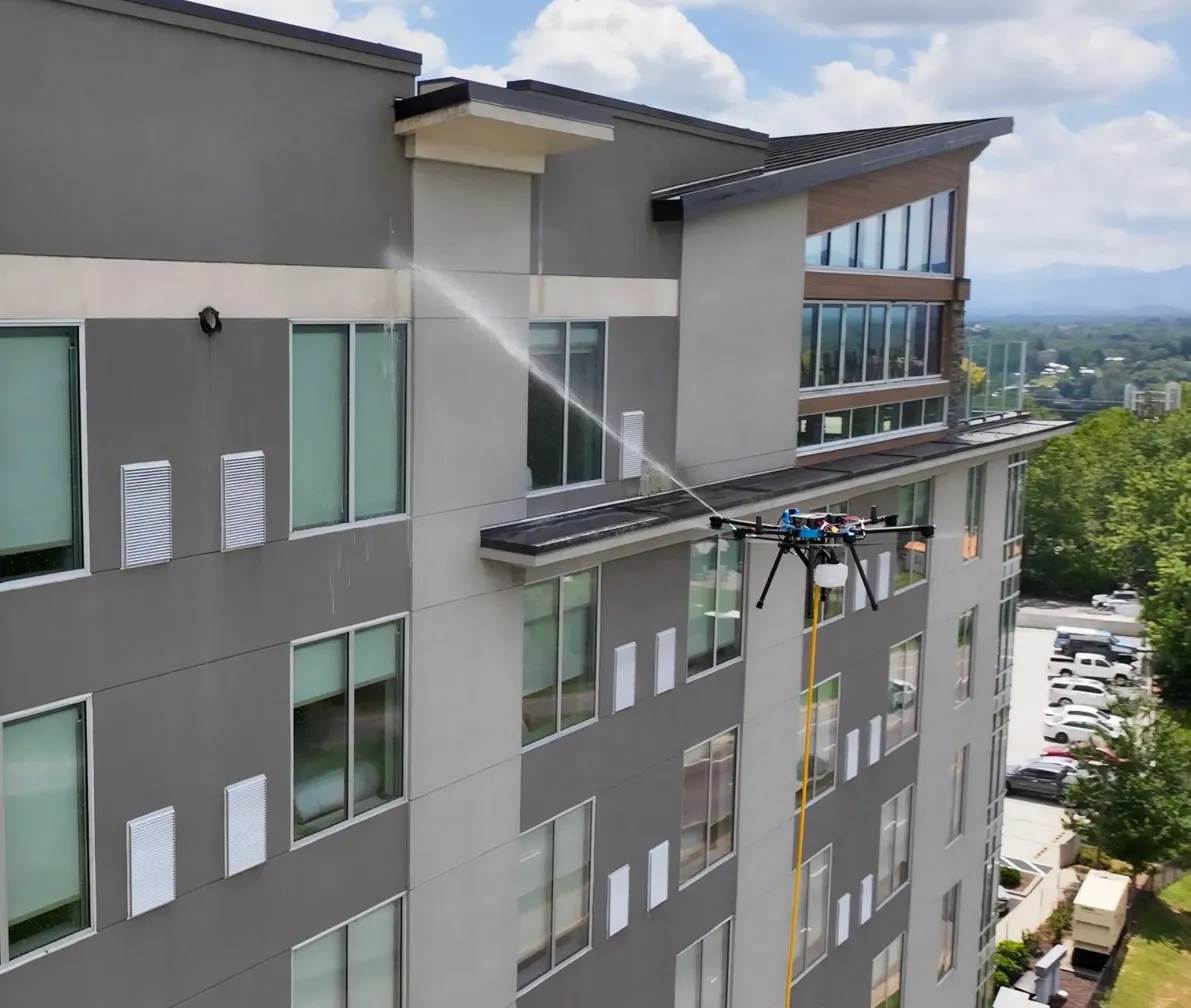
What We Clean Across the Valley
Click any service for Phoenix-metro pricing and scheduling.
Why the Valley Is Hard on Property
Phoenix isn't Tucson and it isn't Yuma. Urban-island heat, constant construction, and monsoon haboobs make a different soiling profile.
Urban Heat Island
Concrete, asphalt, and rooftop AC equipment turn the Valley into a heat amplifier — and a dust amplifier. More particulate in the air than rural AZ.
Constant Construction
New builds across Buckeye, Surprise, and Queen Creek kick up fine dust that drifts onto every nearby roof and window within a mile.
Monsoon Haboobs
1–3 wall-of-dust events per summer deposit fine clay film on every west and south elevation in the Valley overnight.
AC Vibration & Drift
Year-round AC runtime means rooftop condensers vibrate constantly, shaking dust onto solar arrays and into window tracks.
Solar & Property Care in the Valley
The Phoenix metro leads the country in solar adoption, fastest cost-recoup, and resort-corridor cleaning demand.
The City of Chandler's recent $34M solar deal across municipal buildings projects $42.4M in savings over 20 years — and Chandler homeowners recoup their solar costs in just 23.3 months, the fastest payback in the country.
Suburb-by-Suburb: Who Needs What
Phoenix metro is six different markets stacked on top of each other. Solar density, home age, and property type vary dramatically by suburb — and so does the cleaning service that actually moves the needle.
Gilbert
73.9% HomeownershipHigh-income families with rapid solar adoption across newer master-planned neighborhoods.
Chandler
Fastest ROI in U.S.Solar pays back in roughly 23 months. The City of Chandler is layering municipal solar on top of that.
Queen Creek
90.9% HomeownershipFamily-driven demand for energy cost control. New construction is increasingly solar-equipped.
Scottsdale
300+ Sunny DaysResort corridor and high-end residential. Cooling demand drives solar at premium-property scale.
Avondale & Glendale
Top National ROIRepeatedly ranked among the top U.S. cities for fastest solar cost-recoup. Sports district anchors Glendale.
Buckeye & Surprise
West Valley ExpansionRapid new-construction growth. Many builders pre-install solar — homeowners inherit arrays day one.
Phoenix Panels Get Dirtier — Six Reasons
Tucson and Yuma have dust. The Valley has dust plus urban-island particulate, construction drift, and AC-vibration debris — multiplied across the longest production season in the country. Combined with rising APS and SRP rates, every dirty panel costs more than it did five years ago.
Urban Heat Island Effect
Phoenix's concrete-and-asphalt mass holds more particulate in the air than rural AZ. Translation: more soiling load on every rooftop.
Construction Drift
New-build sites across the Valley send fine dust airborne within a mile-plus radius. If you're downwind of any active construction, you're downwind of soiling.
Monsoon Haboobs
1–3 wall storms per season deposit a uniform clay film on west and south elevations. Next sunny day bakes it on.
AC Equipment Vibration
Rooftop condensers vibrate year-round, loosening accumulated debris onto nearby solar panels and skylights.
Rising Electricity Prices
APS and SRP rate increases mean every percentage point of panel efficiency translates to bigger dollars on every monthly bill.
Long-Season Production
Valley arrays produce 11+ months a year. Soiling losses compound across more billing cycles than colder-climate systems.
The Highest Concentration of Hospitality in Arizona
The Phoenix metro has more hotels, resorts, convention space, and Class A high-rise stock than the rest of Arizona combined. Every one of those properties is on a recurring exterior maintenance cycle — and almost none of them should still be paying for scaffolding.
Dozens of multi-story properties needing recurring window, facade, and rooftop solar care.
Class A office and convention-adjacent towers. Drone reach replaces lift rentals.
Multi-family complexes with quarterly turn-cleanings and rooftop solar arrays.
State Farm Stadium, Westgate, and surrounding hospitality. Event-driven recurring cleanings.
Solar United Neighbors Is Expanding the Map
Phoenix and Tucson are both expanding solar access programs through Solar United Neighbors partnerships, increasing the installed base of panels that will need ongoing maintenance. Add a 2,000-acre Phoenix-area solar project that will power 70,000 homes, and the maintenance demand curve is going one direction.
Drone cleaning protects investments that recover their cost in just two years — but only if the panels are kept clean enough to perform at rated efficiency. Dirty panels stretch that 23-month payback into something much longer, on the wrong end of an inflating power bill.
Go Deeper
Why Dirty Solar Panels Cost Arizona Homeowners Hundreds Per Year
The DOE and ASU studies behind the 25% soiling number, applied directly to Valley arrays.
Haboob Season Is Coming: How to Protect Your Property's Exterior
Pre- and post-monsoon playbook for Phoenix homeowners and commercial property managers.
Get a Free Quote — Anywhere in the Valley
Send photos and your ZIP. We'll text back a flat price within the hour.
 Quick Quote
No spam. No obligations. John will text you back personally.