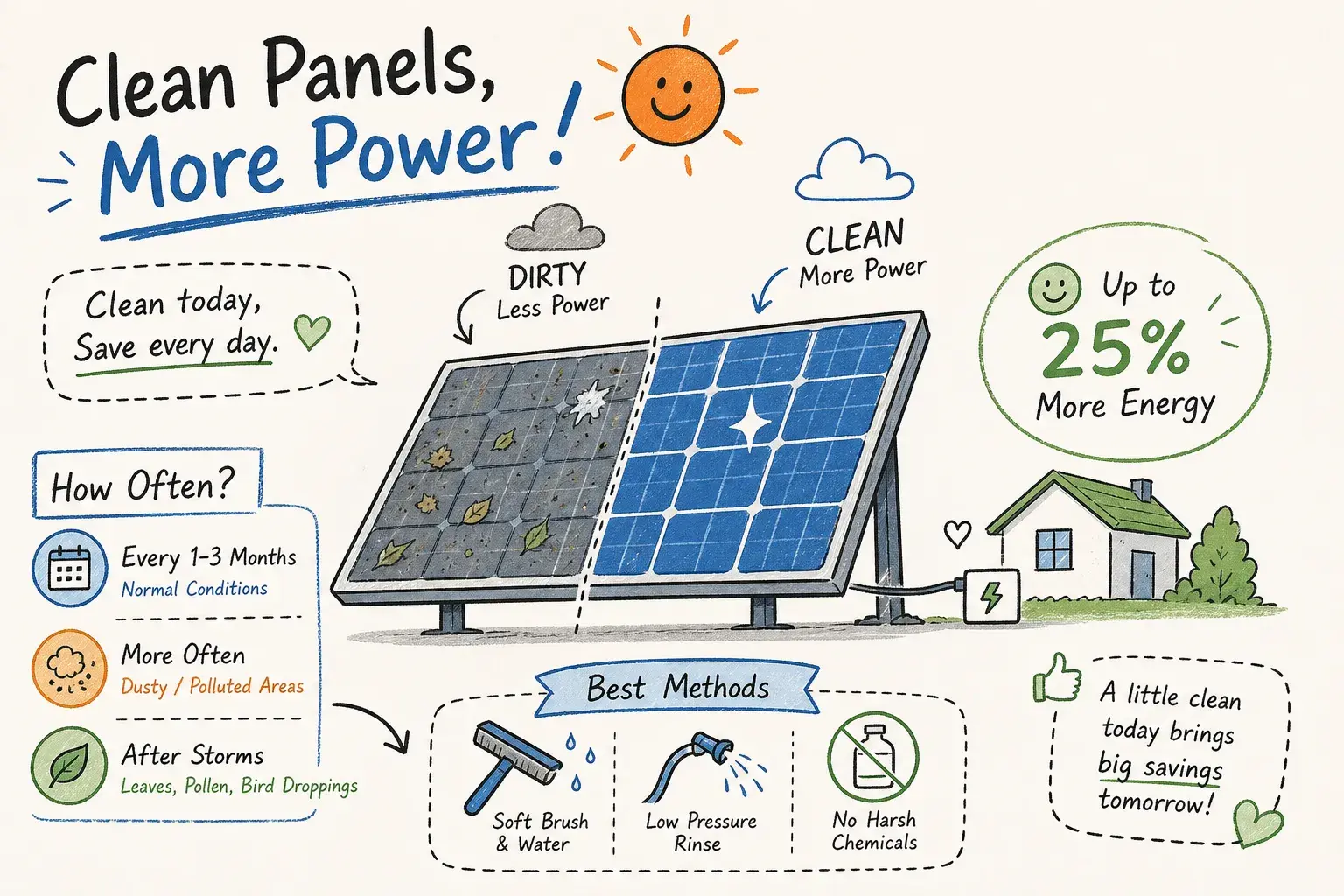
Dirty solar panels reduce your energy output, light dust typically cuts production by 1–5%, while heavy buildup or prolonged dry periods can push losses to 10–15% and in severe, site-specific cases up to around 25%. Regular solar panel cleaning, typically one or two professional visits per year for most homeowners, keeps production close to rated capacity. This article covers when to clean, which methods are safe, what a solar panel cleaning service costs, and how to find a reliable local service.
The core idea is simple: fouled glass blocks light you're already paying to capture. The fix is not complicated, but doing it wrong can void your warranty or put someone on a wet roof without proper protection. Here is what you need to know.
Key takeaways
- Soiling losses are real: Light dust cuts output by 1–5%; heavy buildup or prolonged dry periods commonly reduce production by 10–15%, with severe, site-specific cases reaching higher.
- Location drives frequency: Coastal San Diego panels need 2–3 cleanings per year; inland and desert-adjacent systems typically need 3–4.
- Manufacturer specs govern method: Use low-pressure water, a soft brush, and RO or DI water. Pressure washers and abrasive pads may void warranties.
- Roof access is a hazard: OSHA requires fall protection at exposures of 4 feet or more. Ground-based tools are always the safer first option.
Why dirty panels are silently costing you money
Particulate matter on the glass surface blocks incoming light and reduces current generation at the cell level. Light dust typically costs 1–5% of annual output. Prolonged soiling, the kind that builds up through San Diego's dry season, pulls that number to about 7.4% after 145 consecutive rainless days, based on a California field study covering 186 installations. Heavy fouling can push losses to 10–15% or beyond in extreme conditions.
Bird droppings work differently from uniform dust. A single dropping can shade a small group of cells and trigger bypass-diode behavior, cutting output for the affected panel by a reported 40% or more in some documented cases. Across a full array, bird droppings account for about 0.5–1% of annual losses under typical conditions. Persistent roosting above a system changes that number quickly.
San Diego's climate compounds both problems. Coastal areas deal with salt mist and marine-layer residue that bonds to glass and doesn't rinse cleanly. Inland and desert-adjacent areas face fine dust, agricultural pollen, and Santa Ana wind events that deposit heavy loads fast. Neither environment gets enough rainfall to substitute for a proper cleaning. A neglected array in San Diego is quietly underperforming every day it goes without attention.
How often should you clean your solar panels?
For Southern California coastal systems, 2–3 cleanings per year is a reasonable target. Inland valley and desert-adjacent systems typically need 3–4 cleanings, with additional visits after major dust or wind events. High-desert locations sometimes require quarterly cleaning or more. Outside California, once or twice per year covers most residential systems in moderate climates.
A practical schedule for coastal San Diego is late spring and early fall. Inland systems benefit from adding a midsummer cleaning. The calendar is a starting point, not the rule. If your monitoring app shows output has dropped 5% or more compared to the same period last year, or if you can see droppings or debris from the ground, schedule a cleaning regardless of when the last one happened. Pollen season and extended dry stretches are both good reasons to move up the schedule.
Keep a visual inspection routine every one to three months. You don't need roof access for that. Binoculars from the yard or a window view are enough to spot obvious fouling. A full professional cleaning is a separate event from a quick look around.
Safe PV panel cleaning methods that won't void your warranty
Major panel manufacturers agree on the same basics: clean only when panels are cool, use low-pressure water, and use a soft nonabrasive brush or microfiber tool.
Brand guidance does vary in its specifics. First Solar specifies reverse-osmosis water as the preferred option and sets published limits on water hardness, mineral content, and conductivity. LG's guidance goes further, saying to avoid tap water entirely and skip cleaning agents for routine maintenance. SunPower recommends low-mineral water and only cleaners specifically approved for their modules.
Skip detergent for routine cleaning. Most professional operators use only deionized or reverse-osmosis water because soap leaves a film, attracts more dirt faster, and can affect warranty coverage unless the OEM explicitly approves it. If the module manual does permit a detergent, First Solar specifies a final solution pH of 6.5–8.5. Bleach, ammonia, acetone, and solvent-based products are generally prohibited unless the OEM explicitly approves them, check your specific module manual.
For DIY solar panel washing, a telescoping soft-brush water-fed pole is the safest option and works well for light dust on single-story arrays. Roof access is a different matter. OSHA requires fall protection at exposures of 4 feet or more. If a full-body harness, engineered anchor, and a correctly positioned nonconductive ladder aren't part of your plan, stay on the ground. Avoid pressure washers, they can damage panel seals and may void warranties for many modules; always check your OEM manual before using any pressurized equipment.
Drone cleaning vs. traditional rooftop methods
A wet, sloped roof is one of the more underestimated fall hazards in home maintenance. Tile roofs, steep pitches, and water create a combination that even experienced tradespeople treat seriously. Ground-based water-fed poles handle single-story arrays well, but their reach limits become a real constraint on two-story homes and commercial installations. At that point, the alternative is ladders, lifts, or scaffolding, all of which carry their own access and safety requirements.
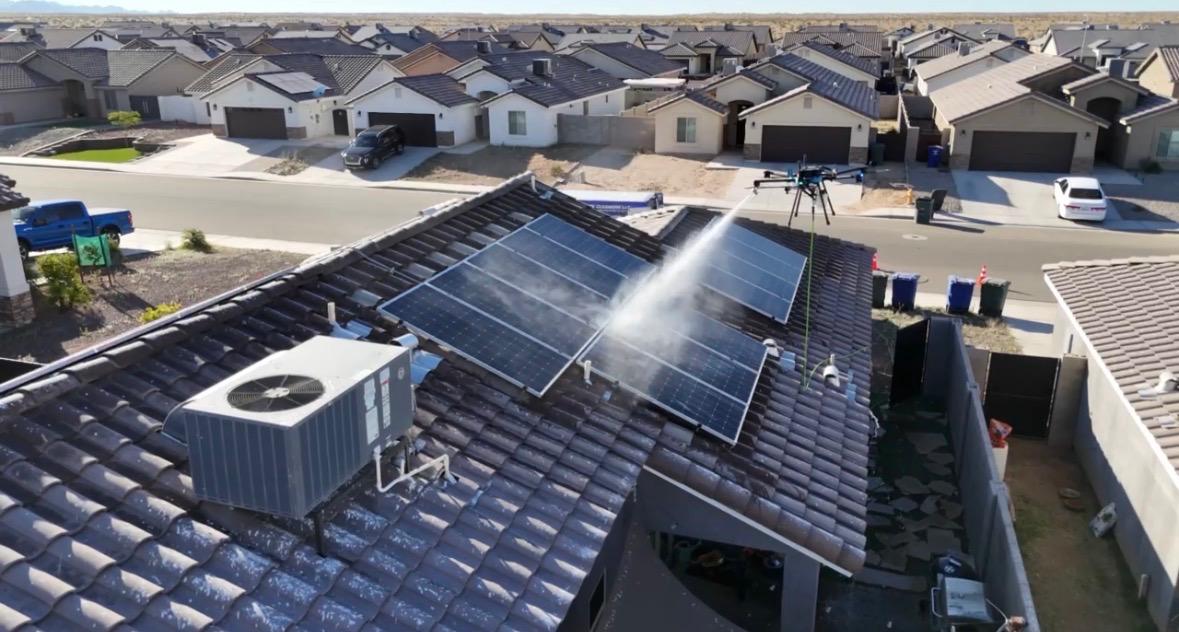
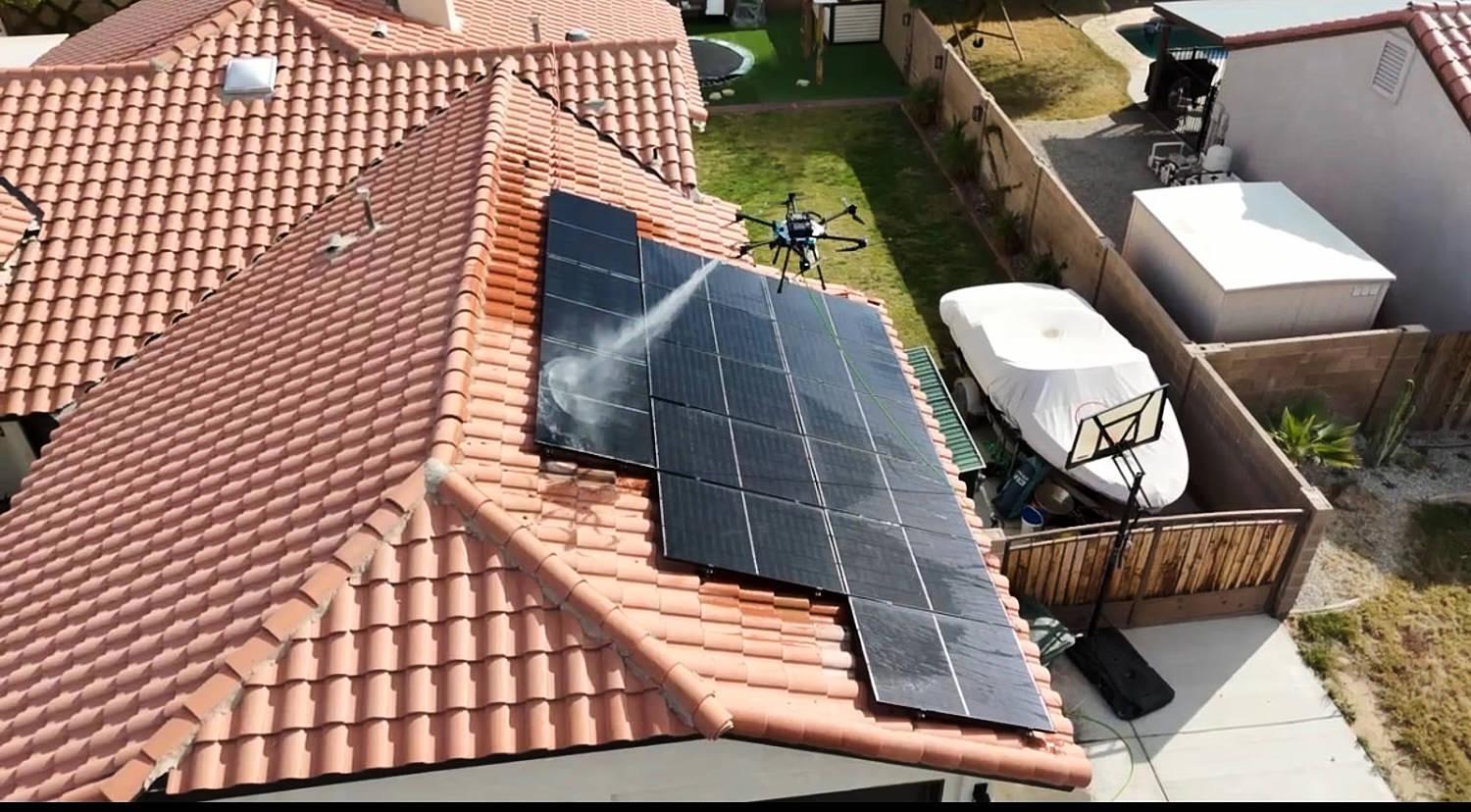
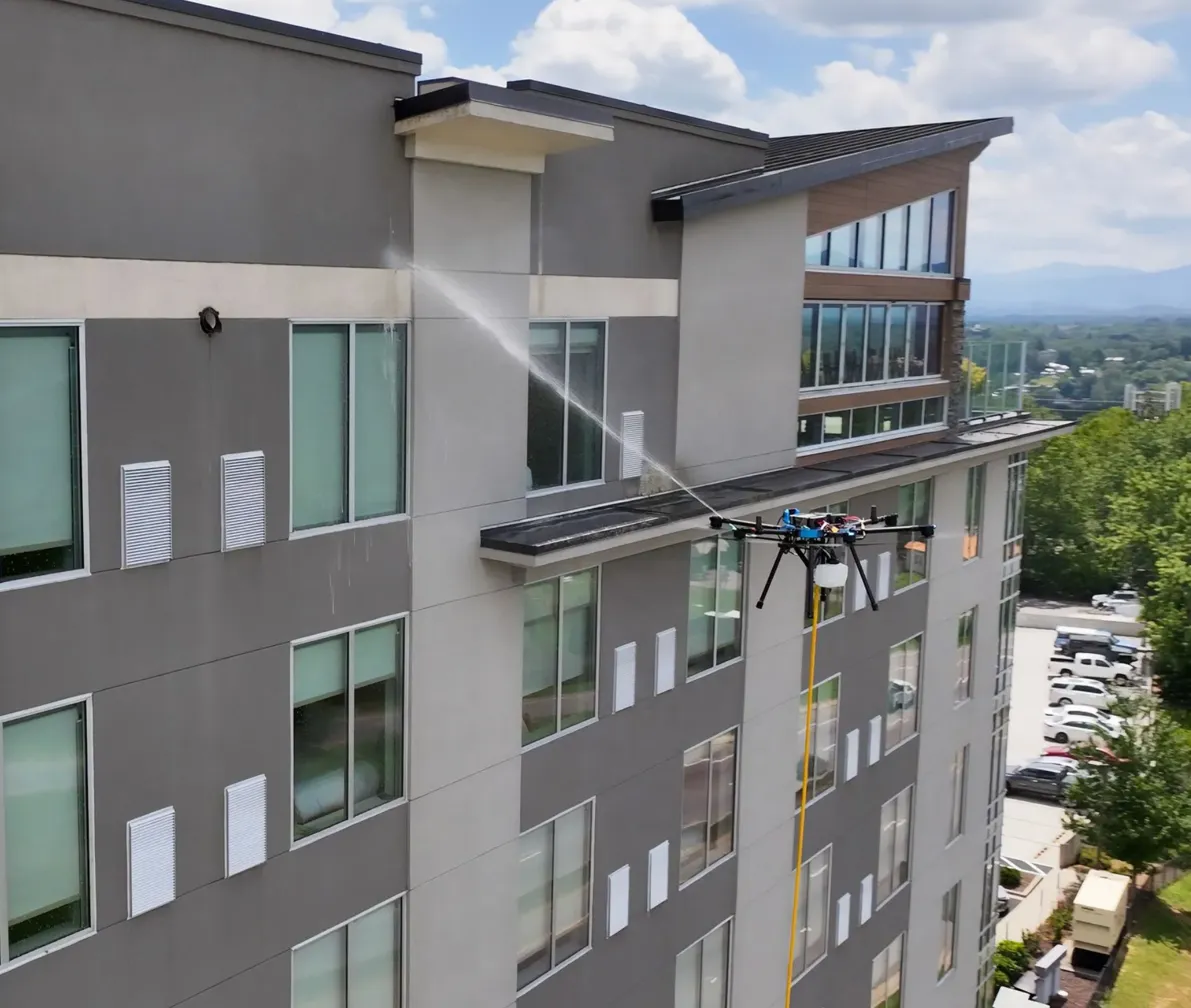
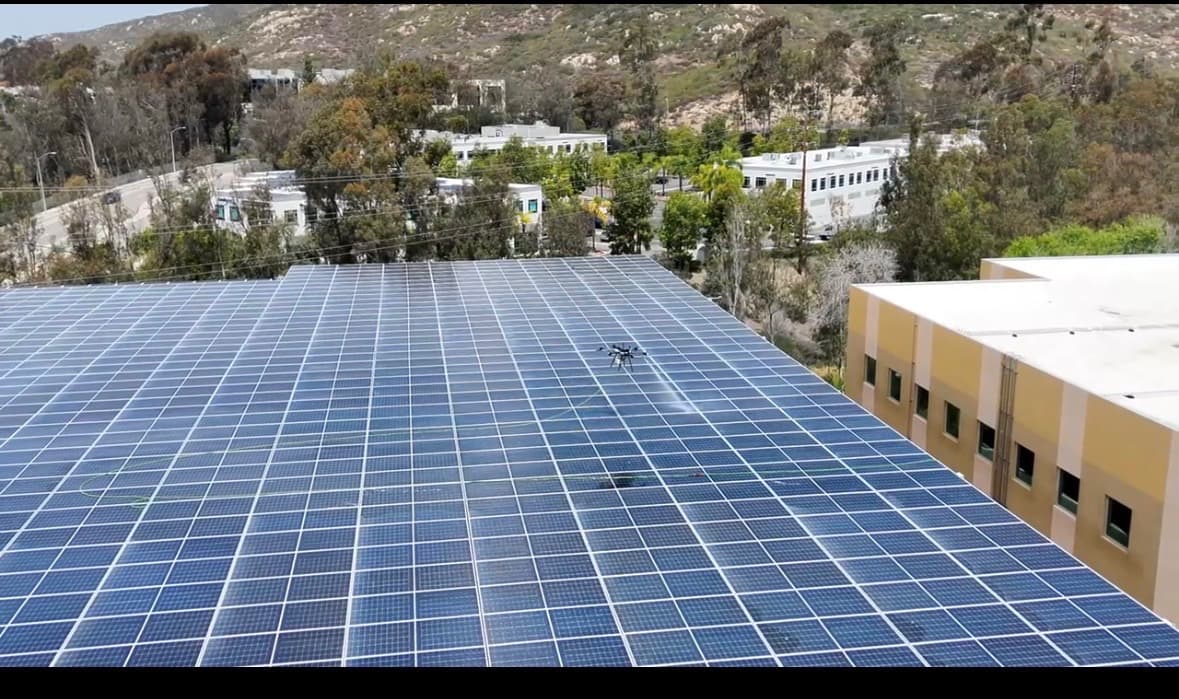
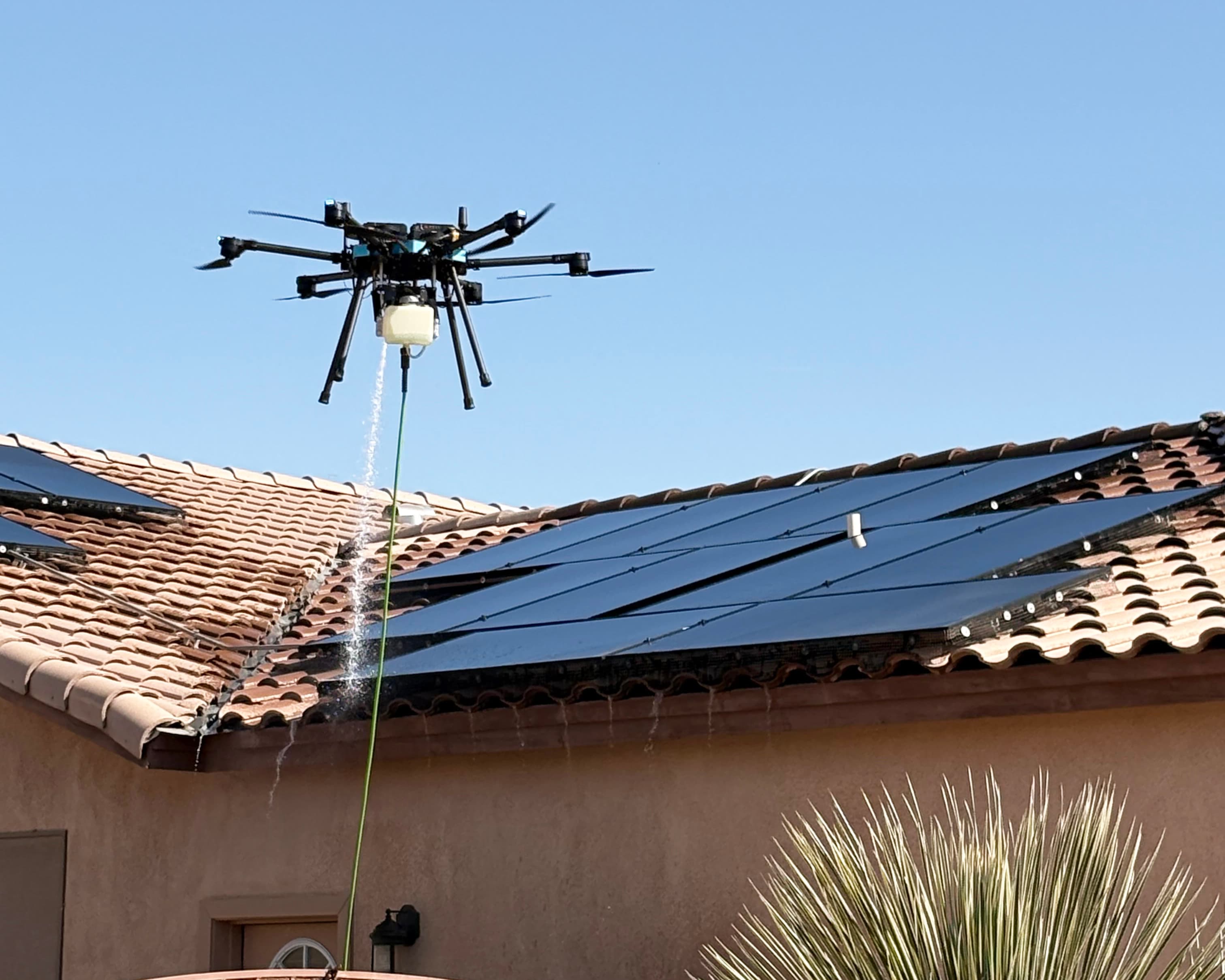
Drone-based cleaning systems deliver water directly to the panel surface without anyone setting foot on the roof. The drone covers the full array systematically and reaches steep pitches and elevated installations that ladders can't match safely, significantly reducing fall-protection demands for routine maintenance. Drones are most effective for routine maintenance of light-to-moderate accumulation; bonded deposits like heavy droppings sometimes benefit from additional spot treatment.
| Feature | Cleaning drone | Water-fed pole |
|---|---|---|
| Reach | Flies over steep, elevated, or obstructed arrays regardless of roof pitch | Limited by pole length and operator position; long poles lose control on large arrays |
| Surface contact | Usually noncontact; minimal mechanical risk to panels | Brush contacts glass directly; better shear for adhered deposits |
| Worker safety | Keeps workers off the roof entirely | May require ladder or roof access for two-story and commercial arrays |
| Best for | Frequent maintenance, steep roofs, large commercial arrays, inaccessible locations | Reachable single-story arrays, heavy localized deposits, edge and frame detail |
Request a free quote or inspection to get started.
What professional solar panel cleaning actually costs
For high-soiling environments like San Diego's inland valleys or areas near agricultural activity, an annual plan is usually the better value over booking individual visits.
The solar cleaning cost ROI calculation is worth running before you commit. In ordinary suburban conditions with modest soiling, the recovered energy value may not fully offset the cleaning cost. In San Diego's dry-season conditions, particularly for inland or heavily bird-affected arrays where losses can reach 10–15%, professional cleaning often recovers more in production value than it costs. The math favors professional service most clearly when visible buildup is present and monitoring shows measurable underperformance.
Homeowner inspection checklist and common questions
A ground-level check every one to three months covers most of what you need to track. Run through these before deciding whether to schedule a cleaning:
- Look from the ground or a window for visible dirt streaks, bird droppings, or debris accumulation
- Check your monitoring app for a production dip of 5% or more compared to the same period in prior years
- Look for discoloration, cracks, or water pooling around panel edges after rain
- Note any new shading from tree growth or neighboring structures
- After heavy pollen season, a dust storm, or a prolonged dry stretch, schedule a cleaning regardless of the calendar
When hiring a professional, require documentation before any work begins. Also confirm workers' compensation coverage for all employees and documented fall-protection training. Request at least three recent local references you can call directly. Get a written quote specifying access equipment, cleaning method, and what happens if a panel or roof is damaged. Walk away if the company refuses to show insurance, proposes walking directly on the panels, or uses pressure washing and abrasive tools.
Can rain clean my solar panels?
In most U.S. climates, rain removes light dust but leaves mineral deposits, pollen residue, and bird droppings behind. In San Diego, where rainfall is limited and concentrated in a few months, rain does not substitute for professional cleaning. The dry season is exactly when soiling compounds most.
Will cleaning invalidate my warranty?
Not if you follow the manufacturer's specifications: low-pressure water, a soft brush, no abrasive pads, and no unapproved chemicals. Using pressure washers or harsh detergents is what risks voiding coverage, not cleaning itself. Check the specific module manual because requirements vary by brand and product line.
Is drone cleaning safe for my panels?
Many drone spray systems designed for PV panel cleaning are noncontact and generally meet the nonabrasive standards manufacturers require. They keep workers off the roof and reduce the risk of anyone stepping on the glass. That said, spray-only drones have different mechanical characteristics than water-fed poles, in particular, less scrubbing force on bonded deposits, so the right method depends on the type and degree of soiling.
The bottom line on solar panel cleaning
Solar panel cleaning is not complicated. The methods are well-defined, the costs are predictable, and the energy losses from skipping it accumulate faster than most people expect. Dirt, pollen, and bird droppings compound over months, and San Diego's limited rainfall means your panels don't get the natural rinse that homeowners in wetter climates can partially rely on.
Clean from the ground when you can. Use the right tools and the right water. When roof access is involved, take the fall protection requirements seriously, or hire someone who does. Vet anyone you hire the same way you'd vet any contractor: license, insurance, references, written scope.
Contact our San Diego team to request a free quote or inspection.
Frequently Asked Questions
How much can a single bird dropping reduce a panel's output?
A single bird dropping can reduce an affected panel's output by 40% or more in some documented cases. Across a full array, bird droppings typically account for about 0.5–1% of annual losses under normal conditions, but persistent roosting above a system can raise that quickly.
What exactly does OSHA require for roof fall protection when cleaning panels?
OSHA requires fall protection at exposures of 4 feet or more. That means full-body harnesses, engineered anchors, and correctly positioned nonconductive ladders are necessary when roof exposures meet or exceed that threshold, so stay on the ground if those measures aren't in place.
Can we use a pressure washer on solar panels?
No, pressure washers should be avoided because they can damage panel seals and may void many manufacturers' warranties. Always check your specific OEM manual before using any pressurized equipment and prefer low-pressure water with a soft brush or microfiber tool.
What kind of water should we use for panel cleaning?
Use deionized (DI) or reverse-osmosis (RO) water for routine cleaning whenever possible. Manufacturers emphasize low-mineral water because soap can leave films and attract dirt, and some brands set specific limits on water hardness, mineral content, and conductivity.